
Crystal Cove State Park
Amenities
- Visitor center
- Picnic
- Accessible Restrooms
- Accessible Parking
- Swimming
- Hiking
- Family-friendly
- Camping
- Bicycling
- Beach Wheelchair
Information
- Website:
- parks.ca.gov
- Address:
- 8471 N. Coast Hwy., Laguna Beach, CA,
Directions . - Region:
- Southern Coast
- Phone:
- Info: (949) 494-3539
- Hours:
- Day use: 6 am-sunset. Historic district closes at 10 pm. El Moro visitor center is generally open daily, 9 am-5 pm.
- Dogs:
- In restricted areas
Dogs on leashes no more than six feet long are allowed on paved areas and in parking lots and the campground. Not allowed on the beach, in the backcountry, or at the Beachcomber Cafe, and may not be left unattended. - Last Reviewed:
- October 2025
- Have something to add?
- Suggest an edit
Crystal Cove State Park extends along both sides of the Pacific Coast Highway (PCH) for 3 miles and encompasses 2,800 acres. There are four park entrances; a fifth entrance, Los Trancos, serves only as a parking lot for the historic district.
On the ocean side is the historic district, an enclave of 46 vintage coastal cottages built as a seaside colony in the 1930s and '40s. Three cottages are accessible (1 & 18 sleeps 6) and Beachcombers Lodge 38 room D is a shared dorm rooms cottage. These are managed by the Crystal Cove Alliance and advance reservations (difficult to get) are essential. To reserve the accessible cabins you must have a DMV-issued disabled plate or placard. You will also find a 3-mile blufftop trail that travels between Pelican Point to the north and Reef Point to the south, a beachside restaurant, picnic tables on the beach (the sand was hard enough for me to cross in my power chair), easy beach access, and a small information center. The Japanese Cultural Center is next to the Crystal Cove Historic District cottage check-in building. At Reef Point you can picnic and access the Bluff Trail; the trails down to the beach are very steep. Pelican Point has the best hiking for wheelchair riders.
East of the highway, at El Moro day-use area, you’ll find picnic tables, restrooms, and the Michael and Tricia Berns Environmental Study Loop, an outdoor learning center for the science of park management and conservation. It consists of an amphitheater and a half-mile accessible loop trail with eight educational science field stations. To access Moro Beach, follow the path from the lower lot through a tunnel under the PCH. Multiple trails traverse El Moro canyon's 2,400 acres of rough, steep terrain; none are accessible.
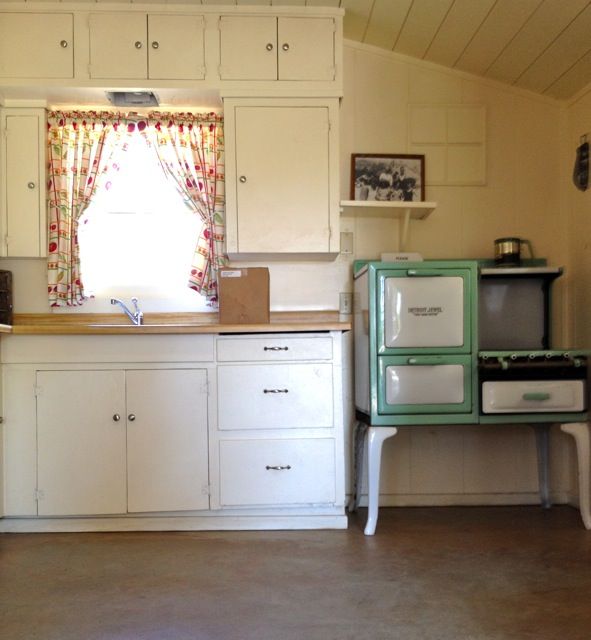
Visitor center: The small visitor center at El Moro has tabletop exhibits of native flora and fauna. The small information center in the historic district has old photos of the cottages and some vintage appliances on display.
Trails and Pathways
- Trail:
- Blufftop Multiuse Trail
- Trailhead Location:
- You can enter the trail from all lots serving Pelican Point and Reef Point, and behind the registration cottage at the historic district.
- Trail Length:
- Over 4 total miles
- Typical Width:
- 4 ft. & above
- Typical Grade:
- Mostly gentle
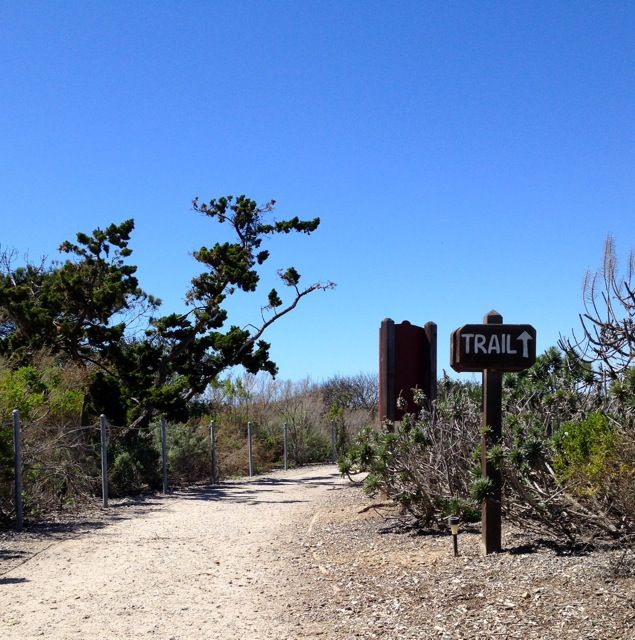
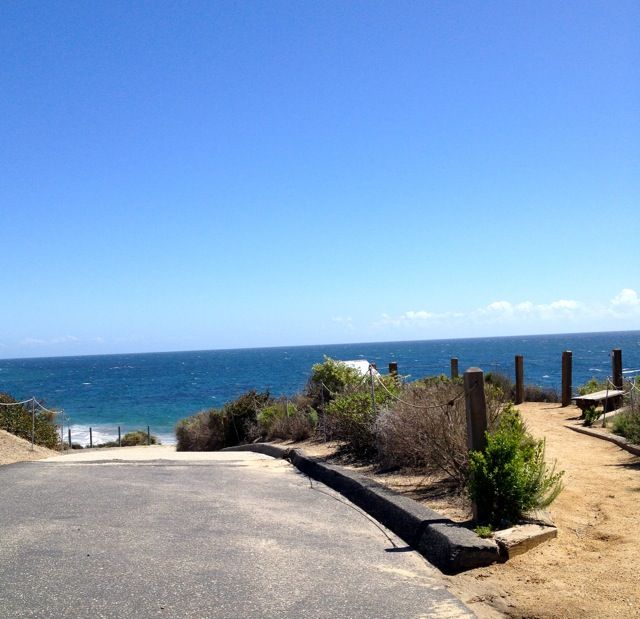
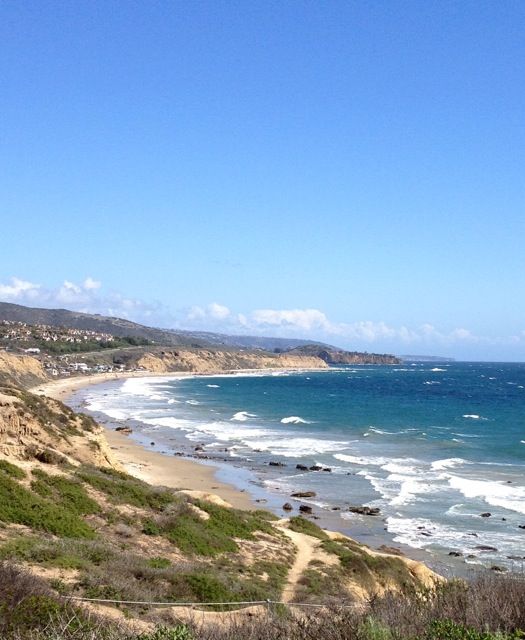
This 3-mile-long blufftop trail travels through coastal scrub 80 feet above the ocean, providing spectacular views and several opportunities to get close to the bluff's edge—almost at eye level with the soaring pelicans that appeared to follow me on my walk. There is no shade along the trail, so bring a hat and sunscreen. I picked up the trail from a connector trail behind the registration cottage in the historic district and headed north for about 1.5 miles to the park's northernmost border at Pelican Point. The first few hundred yards were bumpy, but the path smoothed out as I approached the main trail, which is wide and has an asphalt surface. At this juncture you've reached the Pelican Point area. You could avoid the bumpy section by starting at Reef Point and staying on the asphalt path the entire distance.
The trails through Pelican Point immerse you in coastal sage scrub, home to the endangered California gnatcatcher and many other birds, including California towhees, mourning doves, northern harrier hawks, and white-tailed kites. You’ll pass four restrooms and four parking areas, each with side trails (some are very steep) that lead west, taking you close to the bluff's edge. The unobstructed, sweeping ocean views are worth the effort if you can manage the hills. Before the restroom building at the third parking lot, follow the 5-foot-wide, ground-level boardwalk through a botanical restoration area and drifts of windswept sage—you might see dudleya, blue-eyed grass, coastal prickly pear, and Turkish rugging—to a prime whale-watching spot at bluff's edge. Pacific gray whales pass by here from December through mid-May. A smaller, hard-packed dirt path continues down the bluff to tidepools. It’s narrow and difficult—too steep for me in a motorized wheelchair—but an adventurous person in a manual wheelchair may want to try it.
After about .3 miles the trail curves west, then travels another quarter-mile to the last overlook. An interpretive panel explains that the waters below are designated an underwater park. If you’re up for a workout––there are steep sections––you can continue along the asphalt trail across a covered bridge (it's covered to protect hikers from golf balls from the nearby golf course) that ends at stairs to the beach.
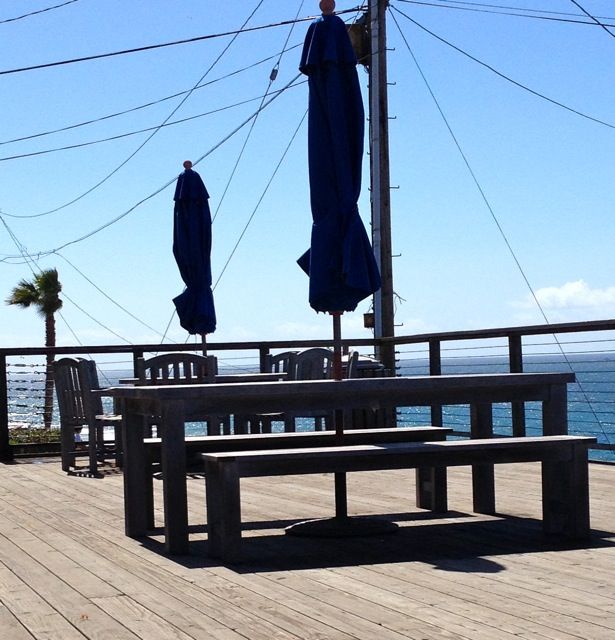
The next day I again started from the historic district (by the park entry road) to check out the southern portion of the trail. It travels about 1.5 miles, has more slopes than the northern portion, and is close to Highway 1 for part of the way. My first stop, because it was right on the path, was the Shake Shop. I slurped a shake on the patio from a front-row seat with an incredible view of the ocean. From here you can also glimpse the historic district down the bluff. The trail climbs steeply for a few hundred yards past the Shake Shop, taking you a little farther from the highway; although you can still hear traffic, unimpeded views of the ocean draw your attention from the noise.
Amenities
- Accessible Parking:
- Yes – designated accessible parking, van accessible, firm;
All park lots have accessible spaces. Parking at the historic district is limited to those with disabled placards, and these spaces fill quickly. Alternatively, you must park in the Los Trancos lot across the highway and take an accessible shuttle, or follow the quarter-mile trail that travels under the road; it is very steep in places, but I managed without difficulty in a motorized wheelchair.
- Accessible Restroom:
- All-Gender. Historic District: In the Japanese Cultural Center, by the accessible parking lot, and behind cottage #1. Pelican Cove: Across from all parking lots. El Moro: At the day-use lot and outside the visitor center., Features: Roll under sink with knee clearance at least 29" high and 30" wide, Toilet height 17"-19", Clear space for lateral transfer, Grab bars on back wall and at least one side, 5' X 5' Turnaround, Stall door at least 32", Entry door at least 32"
- Beach Wheelchair:
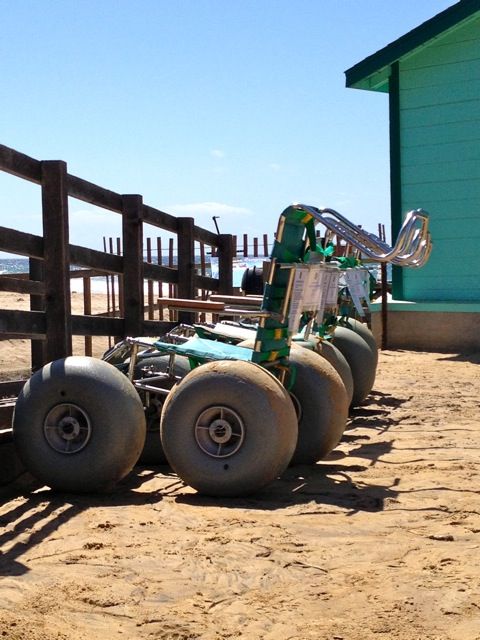
- Yes – Several beach wheelchairs are available on a first-come, first-served basis and are located by the Education Commons by the pedestrian bridge in the Historic District by the Beachcomber Cafe
- Camping:
- Yes
- Accessible Picnic Table:
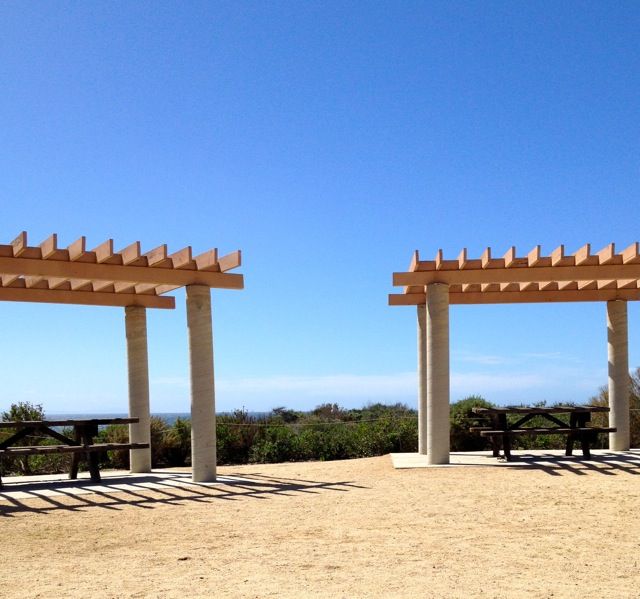
- Yes – firm & stable path to tables, firm & stable surface, 27" or greater knee clearance; Located on the beach, at Reef Point, and at El Moro day-use area.
- Accessible Visitor Center:
- Yes


